Our story · 2025 onwards
It started with a pile nobody was looking at.
REINCYCLE is a small, documented attempt to answer one question with real objects: when something can no longer be sold, is it really finished? This is how the question turned into bins, chairs, and a list of things we still do not know.
( 01 )Why it began
A depot's quiet corner
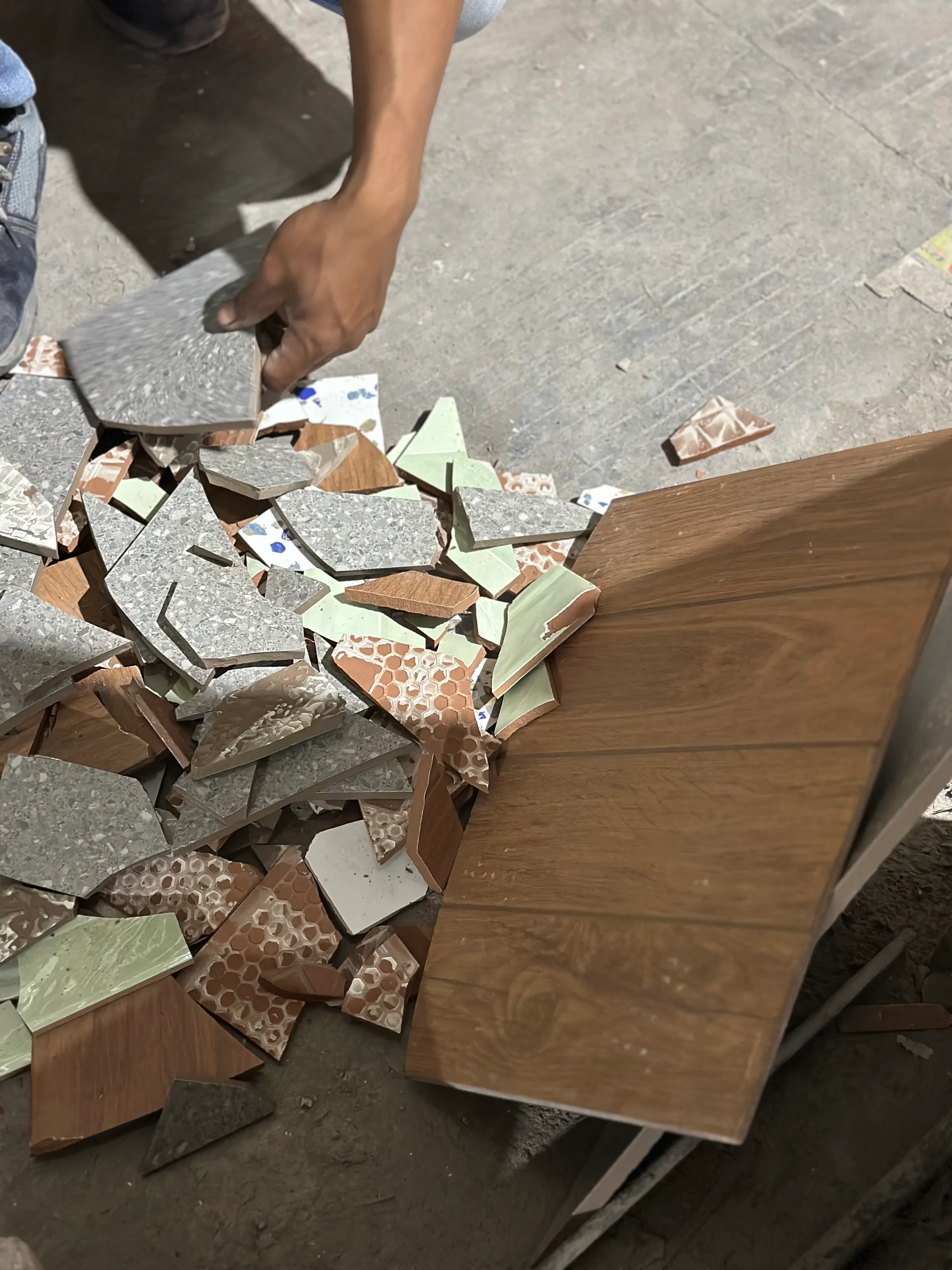
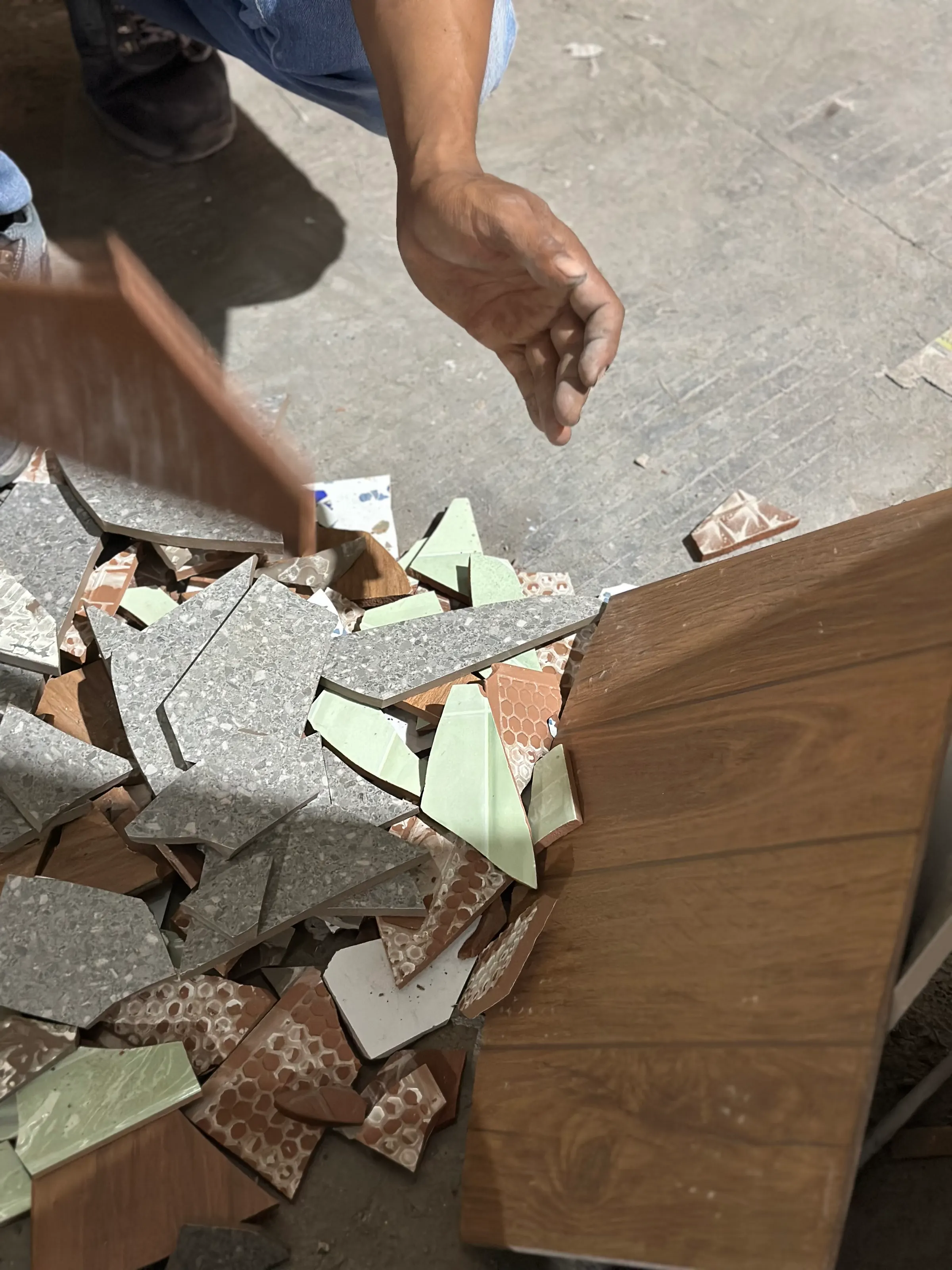
The founder grew up around a family-run building-materials business in Tasikmalaya: cement, tile, taps, doors. Every depot has a corner where damaged and returned stock waits. It is so ordinary that people stop seeing it.
In 2025 he began to look at that corner differently. The label "unsellable" covered very different conditions. Some pieces were genuinely dangerous. Many had only lost their sale value because one edge was gone.
By his account, he was already thinking through the research in 2025. Most of that year went into research and into working out how the activity could be carried out, while the resources for it started to be gathered. That first stretch was not photographed. The photographed record on this site starts in 2026, with the first photographs of the depot and the sorting.
( 02 )Listening first
No brand, no product, a notebook
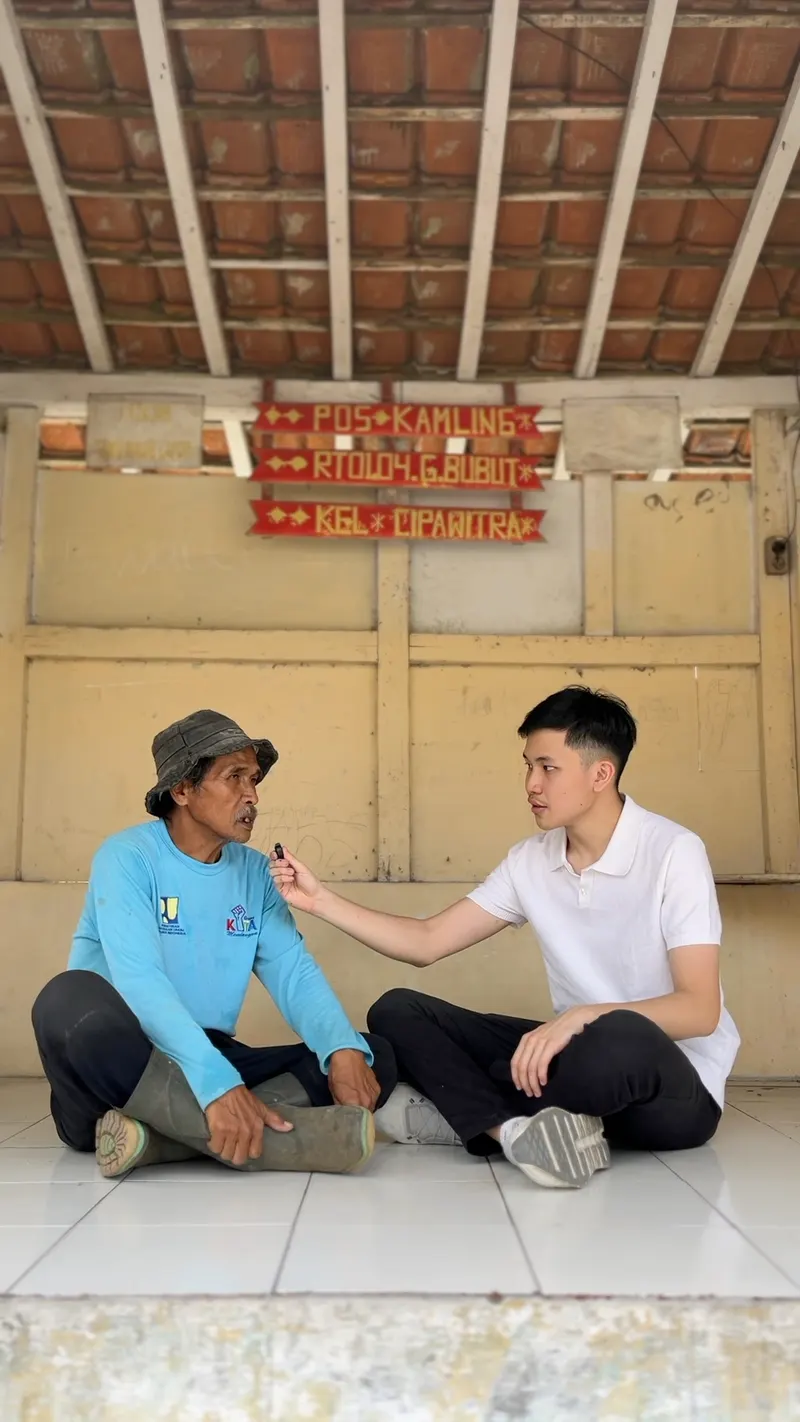
The rule written into the project's own documentation brief was blunt: do not mention a product, do not ask residents to praise anything, ask what is missing and let the answers differ. The first visit was to the kelurahan office; the next were to lanes, stalls and waiting spots.
Residents talked about disposal points that were too few and often full, about waste that was sometimes burned, and about having nowhere to sit. One resident asked for a night-watch post.
( 03 )Choosing
Two things the material could do well
Several needs, one small project. The founder compared how often each need came up, who would use it, and whether leftover material could serve it safely. Sorting bins and seating passed all three tests.
One rule governed every design: reclaimed material is a surface, never a structure. Frames use steel of known condition. Pieces that are sharp, crumbling or badly cracked are not used at all.
Published finding · 2026
More than one need, and how one was weighed against the other
REINCYCLE published what it heard as an Instagram post, “The Findings”. This is a summary of that post in our own words.
Two needs kept coming up
A waste bin
Somewhere proper to put everyday waste.
Seating
A simple place to sit, so shared spaces are more comfortable to use.
Compared on four points
Frequency
How often the need came up.
Urgency
How soon it has to be answered.
Users and place
Who would use it, and where.
Feasibility
Whether a project this small can really do it.
What stood out
Of the two, the need for better waste handling showed up more consistently in daily life.
Raised more often
Residents brought up waste more often.
Seen every day
Waste was visible in several of the areas visited.
Used by many
A bin serves residents in different parts of the kelurahan.
What came next
Neither need was dropped. Both went on to the next question: can the material on hand realistically answer it? The post states the rule plainly: the material has to fit the need, not the other way round.
( 04 )Building
Paid by the job, criticised on request
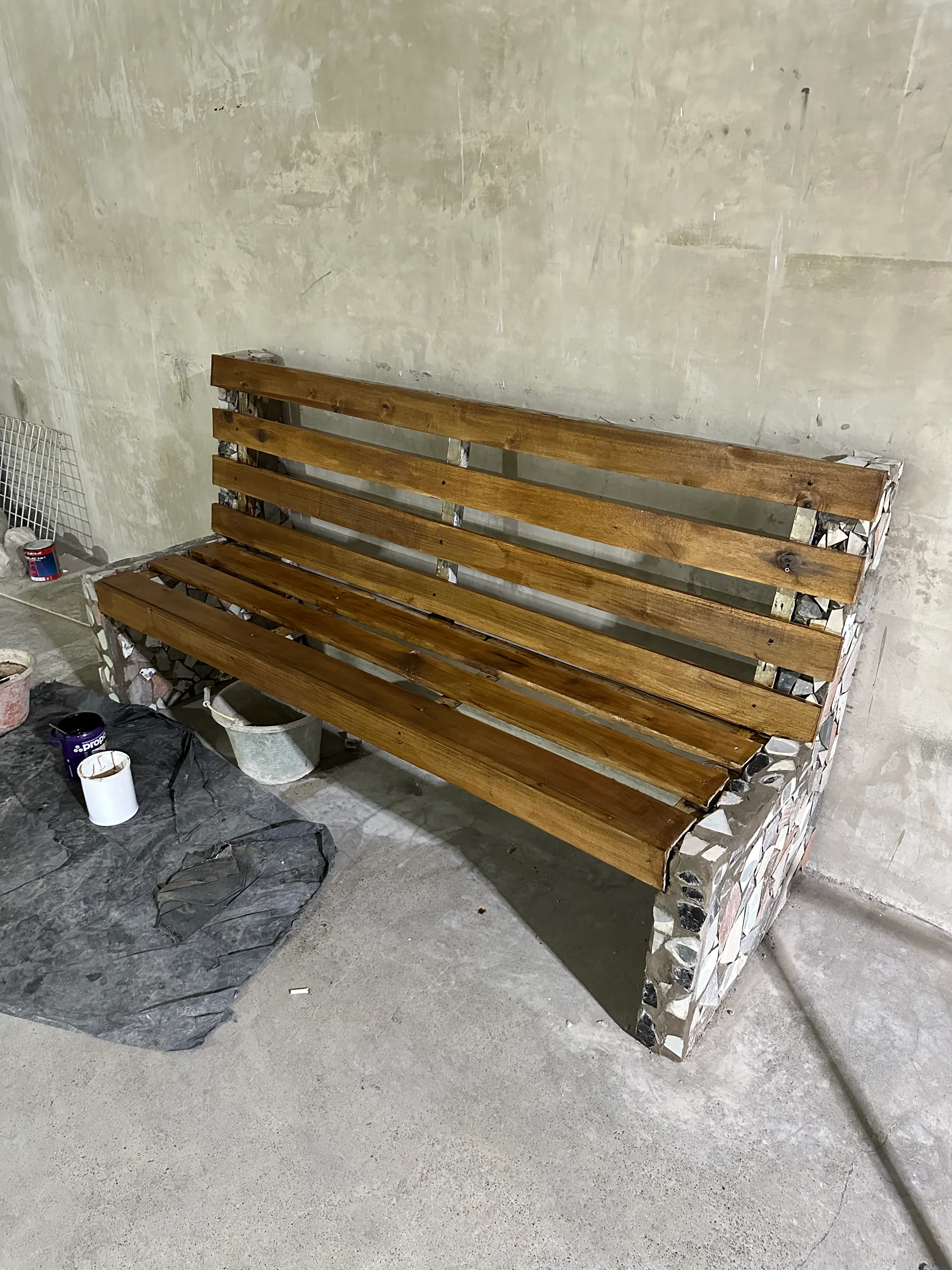
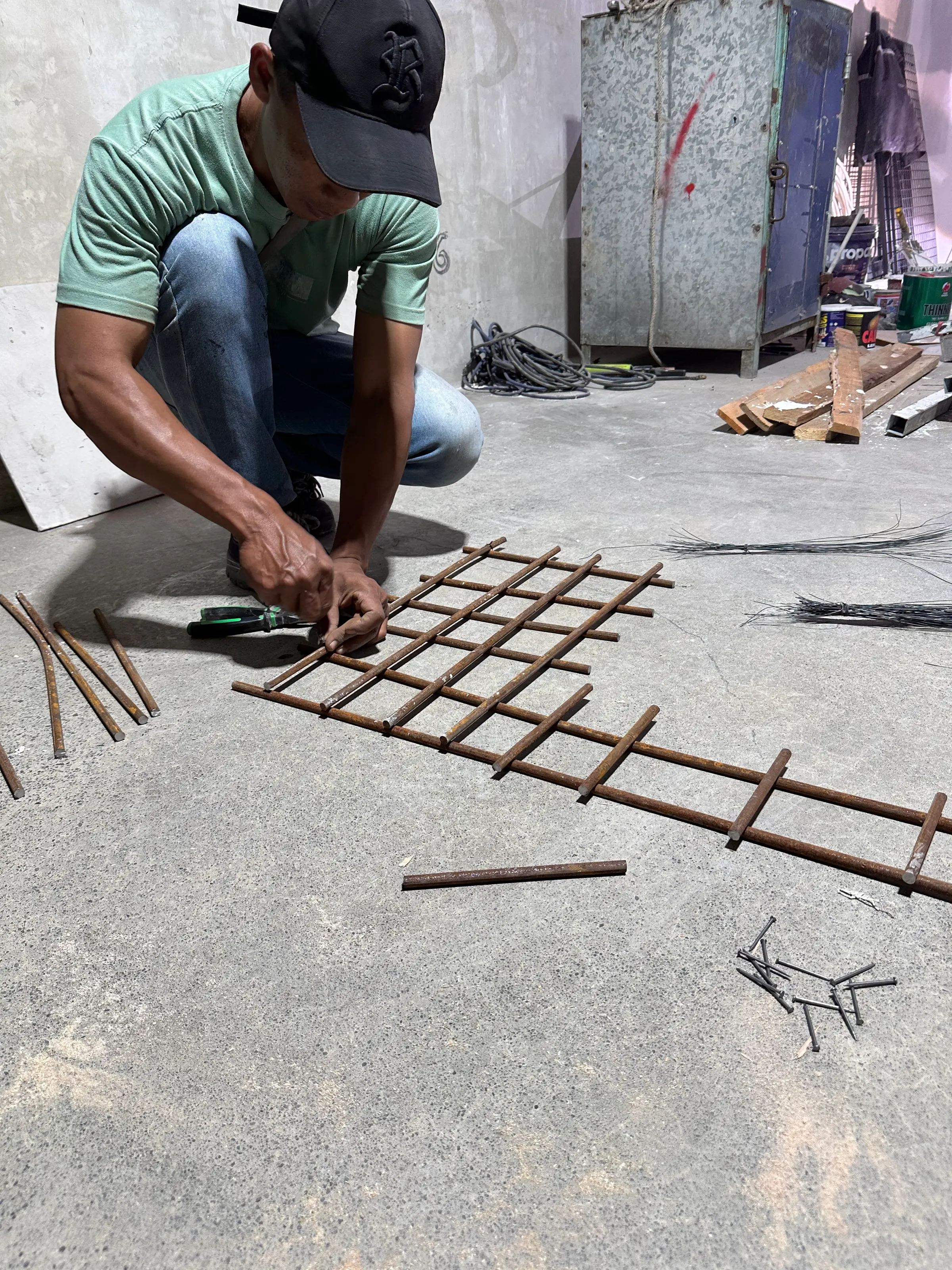
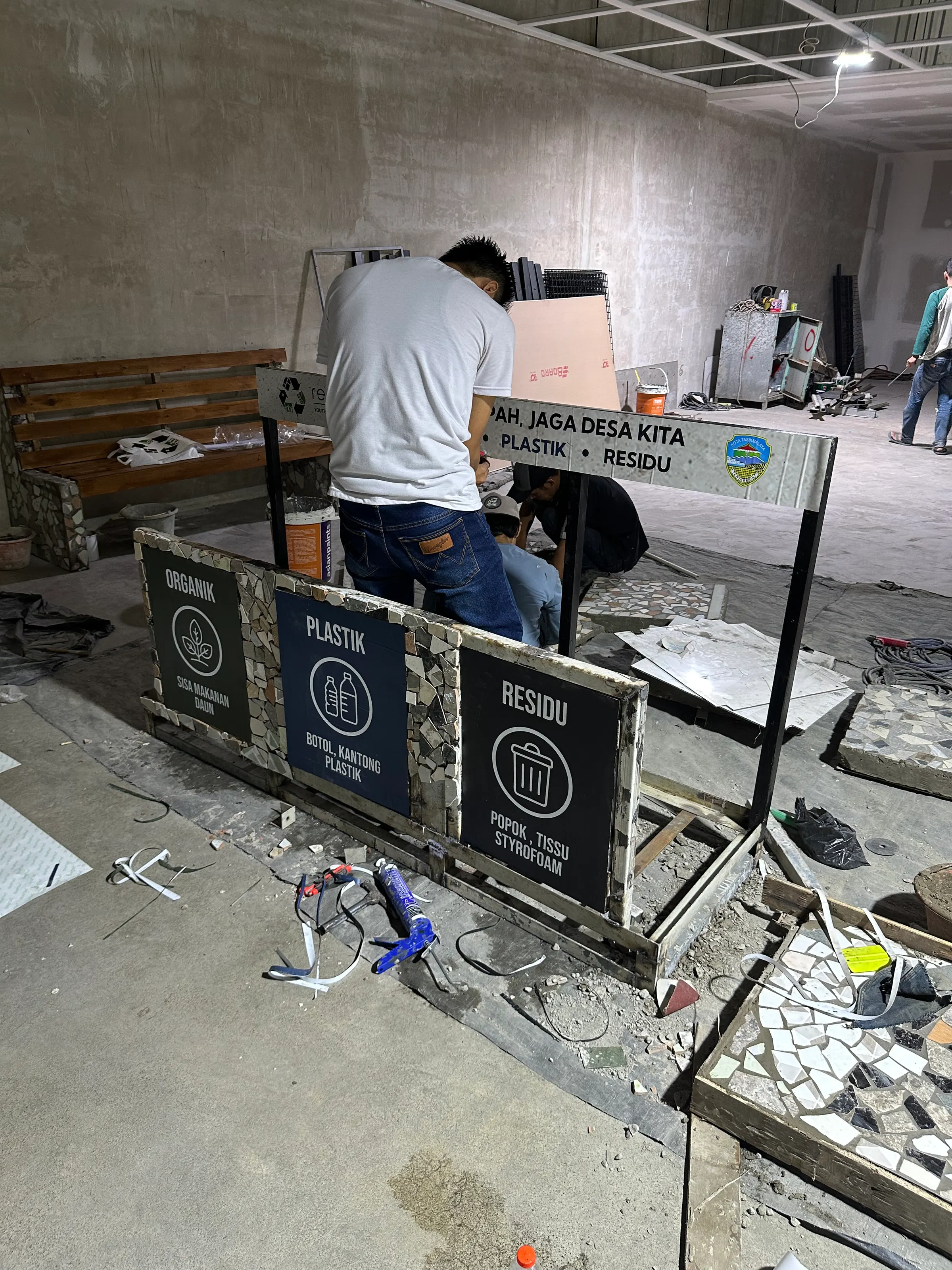
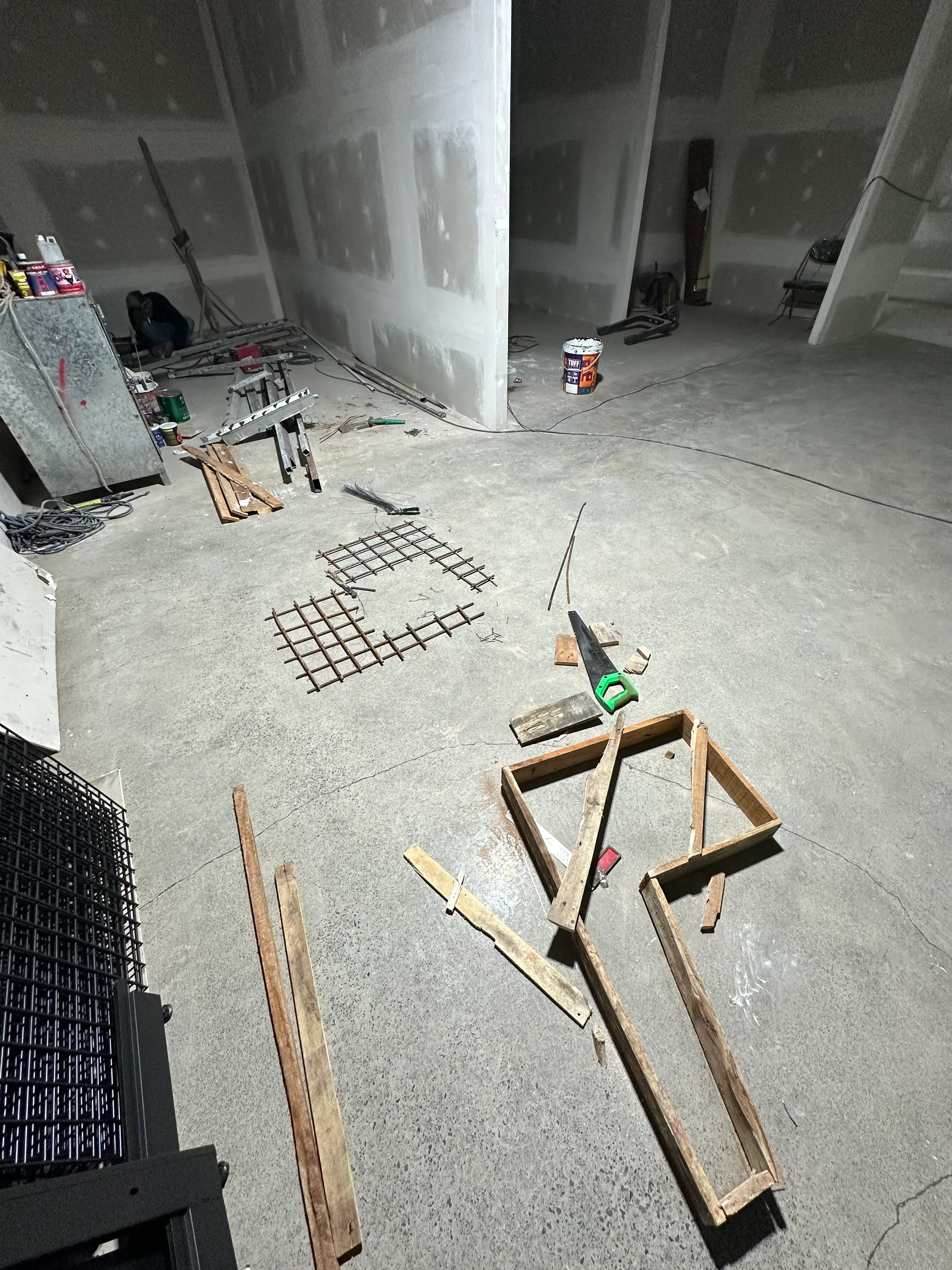
About five local makers were hired and paid per job. They were shown the sketches and asked to name the worst part. Dimensions and joints changed before anything was cut. Steel came first, then concrete cast around tied reinforcement; broken tile went in last, pressed into the surface.
Most of the build happened while the founder was back in Shenzhen. Progress arrived as daily photographs. One paint finish did not pass and was redone. Some makers began checking one another's work without being asked.
( 05 )Handover
Nine units, one letter, three days of sitting
Chairs were placed and used for three days before they were formally handed over. In 2026, nine units stood in public areas of the kelurahan, a count confirmed in a letter from the head of Kelurahan Cipawitra.
The founder has seen residents use both the bins and the chairs. He has also written the sentence that defines this project's standard of honesty: a full bin is not proof of sorted waste, and nobody has measured whether less is burned.
( 06 )What we hold to
Four working values
Ask before building. Safety over cleverness. Pay people for their work. Say what has not been measured.
( 07 )Learned so far
Installing is the start of the question
A physical object shows problems a sketch hides. Planning targets do not become data on their own; someone has to weigh the pile on the day. And the most useful question a project can ask is not what can this material become, but what is this place missing.